
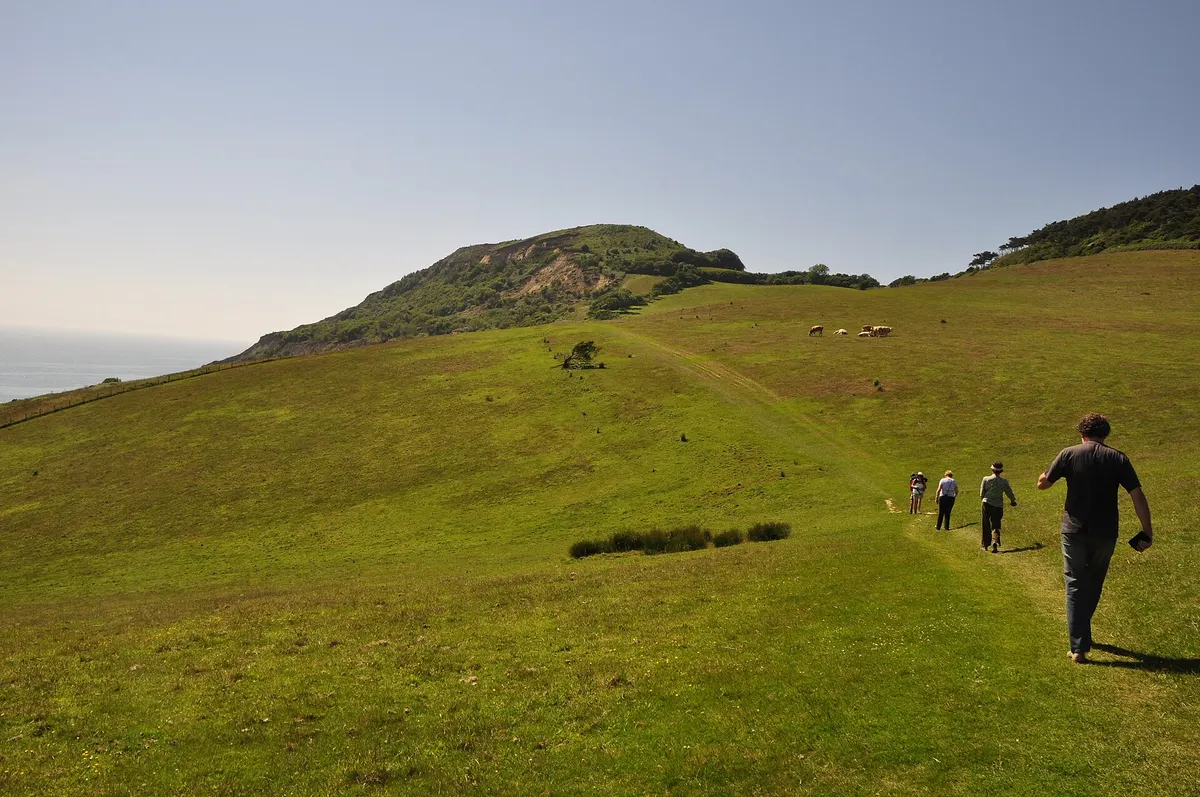
A solo traveler recently embarked on a three-day walking trip across a section of England’s South West Coast Path, traversing the scenic cliffs and historical towns of Dorset. The journey offered a firsthand look at the realities of long-distance coastal walking in England, combining rugged natural landscapes with accessible village amenities.
The trek highlighted both the physical demands of the trail—such as steep climbs and sudden route closures—and the unique advantages of England's densely populated coastal network, which allows hikers to experience remote wilderness by day while sleeping in a traditional bed by night.
What happened
Setting out from the seaside town of Weymouth, the traveler encountered a surprise military parade featuring an Army band, an Anglican priest, and a Spitfire flyover. After leaving the town hubbub behind, the route involved tackling rolling cliffs, with 400-foot ascents and descents repeated continuously.
After approximately 12 miles of walking on the first day, the route reached West Lulworth, a village of centuries-old stone cottages. The stop featured views of Durdle Door, a limestone arch extending into the English Channel, and Lulworth Cove, a nearby bay enclosed by limestone. The first day concluded with a stay at a local bed-and-breakfast, the Old Barn Inn.
The second day introduced logistical hurdles when part of the planned coastal route was closed due to an active Army firing range used for training. To bypass the restriction, the traveler used public transit to ride partway to the next destination. Following verbal directions provided by the B&B owner, the trek continued through a series of fields and over a steep hill, eventually leading to a navigation misstep that required bushwhacking through open land.
Why it matters
Long-distance walking routes in England offer a distinct way to experience the country's geography compared to traveling by car or train. The journey demonstrates how infrastructure and public transit support outdoor recreation, allowing hikers to tackle challenging terrain without the burden of carrying camping gear. For solo travelers, the proximity of towns, reliable phone service, and accessible medical care reduce the risks typically associated with remote wilderness expeditions.
The background
The South West Coast Path is a 630-mile trail winding through the landscapes of southwest England. Earlier this year, it was incorporated into the newly created King Charles III England Coast Path, an initiative inaugurated by the king in March. This broader network integrates preexisting regional coastal paths to span nearly 2,700 miles.
The specific stretch walked in Dorset is known as the Jurassic Coast, a region named for the ancient fossils discovered there as a result of millions of years of coastal erosion. Weymouth, the starting point of the trip, gained popularity as a seaside destination following visits by King George III at the turn of the 19th century.
What happens next
The reports do not detail the final day of the three-day walking trip, leaving the conclusion of the trek unmentioned.
Key takeaways
- A traveler completed a three-day solo walking trip along a portion of England's South West Coast Path in Dorset.
- The route crossed the Jurassic Coast, an area renowned for its unique rock formations and fossil discoveries.
- Walkers on England's coastal paths benefit from proximity to towns and public transit, enabling hotel-to-hotel travel without camping gear.
- Part of the planned route on the second day was closed due to an active military firing range, requiring a detour by bus and foot.