
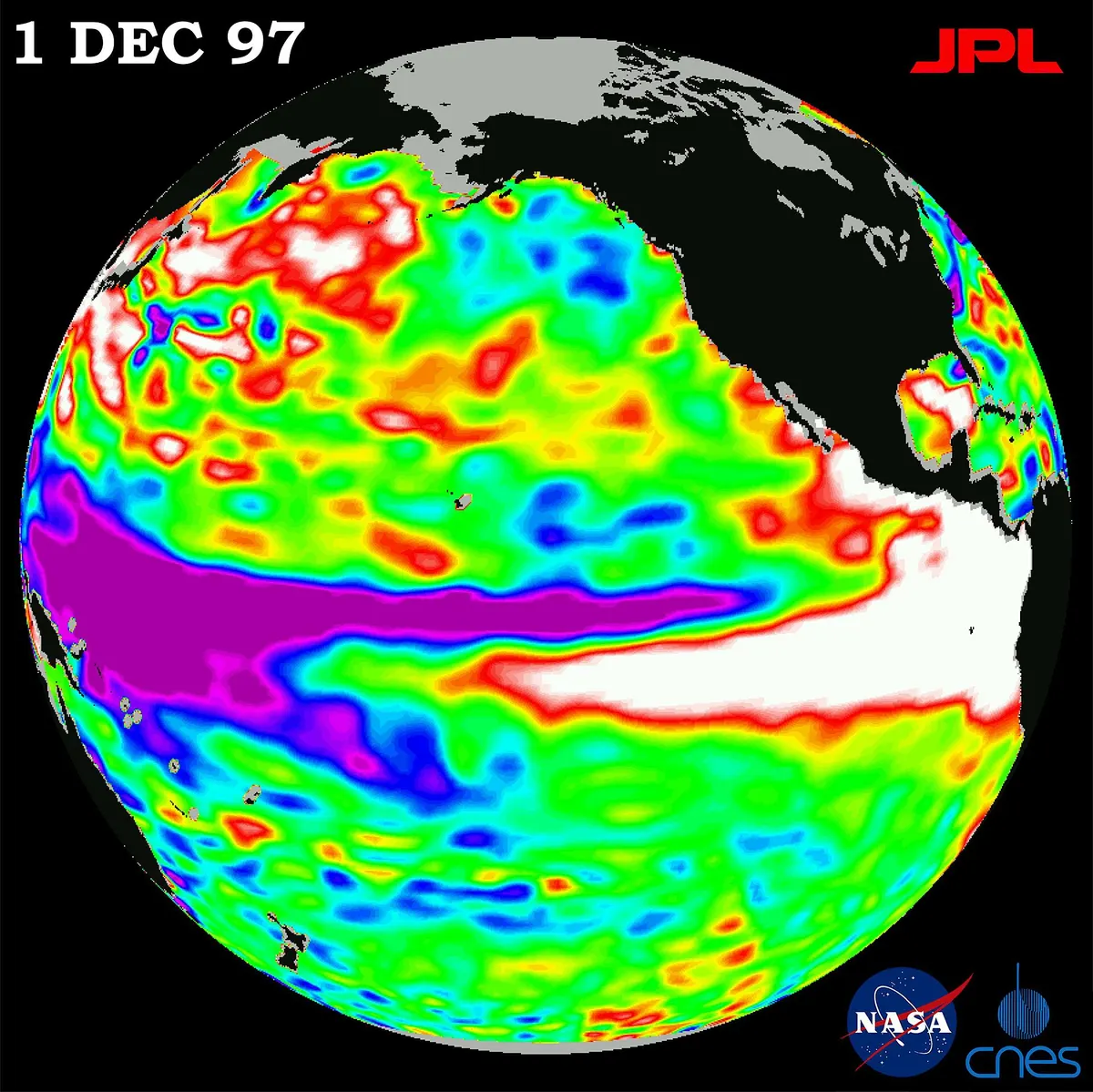
A historic weather event is taking shape across the globe as an exceptionally powerful El Niño reaches record-breaking strengths. Meteorological data shows that temperatures in a key region of the Pacific Ocean have climbed significantly above normal, sparking widespread warnings about severe climate impacts.
Experts note that the phenomenon is combining with a planet already heated by climate change, driving volatile weather systems from South America to the UK. Authorities are monitoring the situation closely as communities brace for agricultural disruptions and heightened environmental risks.
What happened
The current El Niño event, building since the summer, has been described by researchers as the strongest in at least eighty years of record keeping. Sea surface temperatures near the Galapagos Islands and the coast of Peru have surged to nearly 10 degrees Celsius warmer than normal. This massive band of exceptionally warm water has weakened trade winds, pushing warm surface waters eastward toward the Americas.
The resulting conditions have already triggered heavy rain, flooding, and extreme winds along America's west coast. Conversely, the phenomenon has driven drought and wildfire risks across southeast Asia, Australia, the Amazon, and southern Africa. In New Zealand, dry and windy conditions have prompted fire authorities to declare restricted fire seasons in inland Otago and South Marlborough after vegetation fires broke out.
Why it matters
The severe weather shifts carry profound consequences for global agriculture, wildlife, and household economies. The UN's World Food Program projects that the climate phase could push an additional 49 million people into hunger due to widespread disruptions in crop production. Volatile weather patterns threaten agricultural yields globally, which could translate to soaring prices at grocery tills for products such as rice, coffee, and cocoa.
Ecosystems are also facing severe strain as the disruptions tear through local food webs, leaving marine animals like sea lions and penguins struggling to find sustenance. Furthermore, the heightened risk of dry conditions and strong winds has forced emergency services to restrict outdoor burning and enforce fire bans in vulnerable regions to prevent fast-spreading blazes.
The background
El Niño is the warm phase of a two-part climate cycle known as the El Niño Southern Oscillation, which naturally shifts between hot and cold phases every two to seven years across the tropical Pacific Ocean. During the warm phase, the ocean releases massive amounts of heat into the atmosphere, raising average global temperatures. The opposite phase, known as La Niña, features cooler surface waters and stronger trade winds pushing back toward Asia and Australia.
What happens next
Forecasts indicate that the current El Niño trend is expected to peak in December before rapidly collapsing next year. Weather analysts predict it will make way for a strong La Niña phase by late 2027 or early 2028. This upcoming shift could eventually bring colder, wetter, and stormier conditions to the UK, alongside heavy rains in the Pacific Northwest and altered hurricane activity in the Atlantic basin. However, exact local impacts remain uncertain as meteorologists continue to track ocean anomaly data.
- An exceptionally powerful El Niño has reached record strengths, marking the strongest event in at least eighty years of meteorological record keeping.
- Sea surface temperatures near the Galapagos Islands and Peru have risen to nearly 10 degrees Celsius warmer than normal.
- The UN World Food Program projects the weather phase could push an additional 49 million people into hunger due to agricultural disruptions.
- Weather forecasters predict the current El Niño will rapidly collapse and give way to a strong La Niña phase by late 2027.